A guest post by Barbara James, a one-time editor of The Perry County Tribune and one of the founders of the MacGahan Foundation.
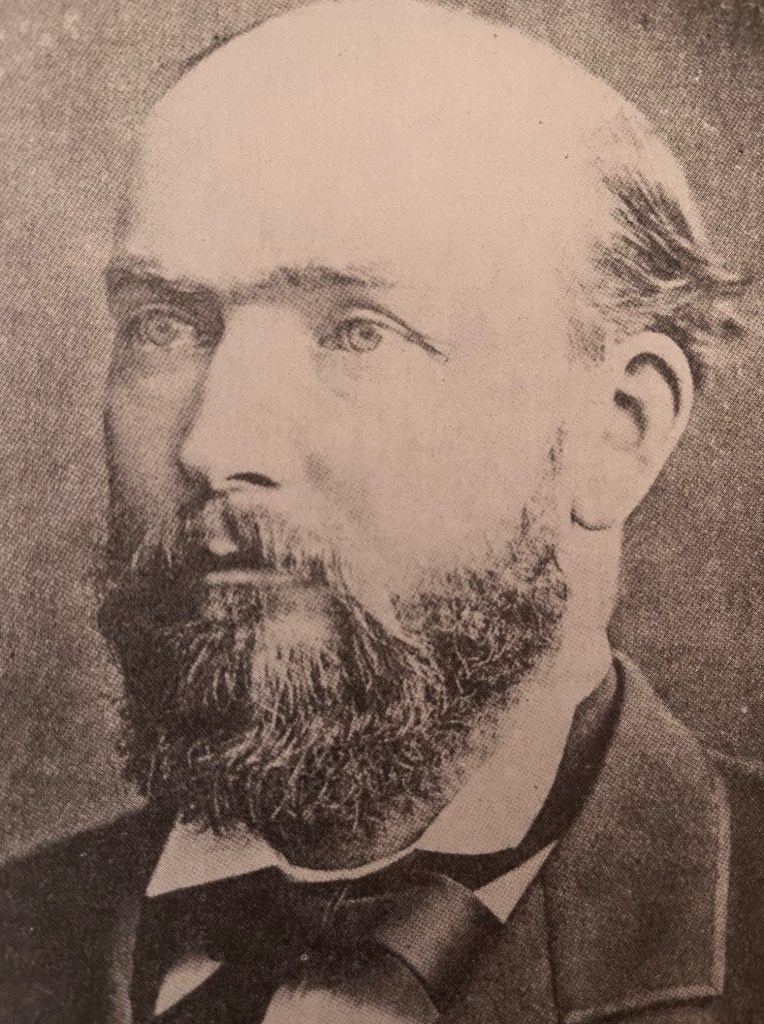
An Ohioan Who Changed the Map of the World
Not many people can say they changed the map of the world. But that’s what Januarius Aloysius MacGahan did. And Perry County can claim him as one of its own.
MacGahan was born in 1844 to an Irish-Catholic farm family on Pigeon Roost Ridge, a few miles from New Lexington, Ohio. While he learned to farm and hunt and ride, MacGahan was happiest with a book or a pen in his hand. He left home to pursue a career that involved brains more than brawn.
Becoming a Special Correspondent of the Franco-Prussian War
It was an encounter with a distant cousin, General Phil Sheridan, that set MacGahan on the path that would change his life and the course of history. Sheridan advised the young man to travel to Europe to study law and languages. MacGahan did. But after two years, with savings spent, the young man made plans to return home. But, again, an encounter with Sheridan changed MacGahan’s life. The general was in Paris as an observer of the Franco-Prussian War. He introduced MacGahan to two foreign correspondents of his acquaintance. One who worked for The New York Herald arranged a job for MacGahan as a “special” correspondent, a low-level reporting position.
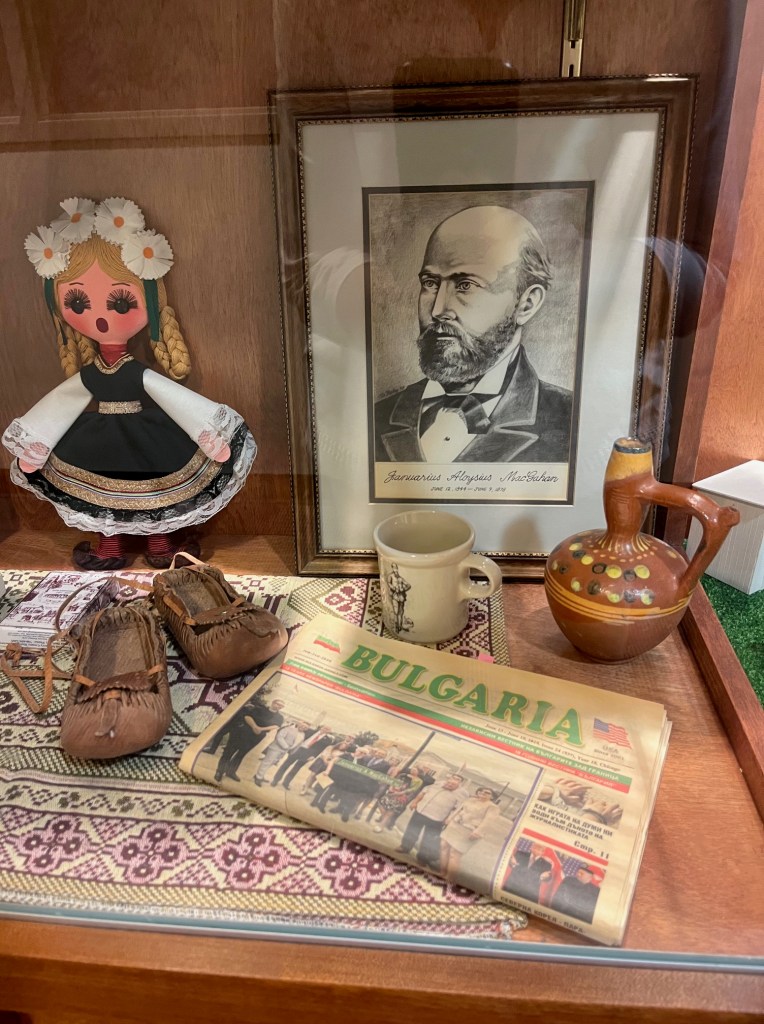
MacGahan quickly became a star reporter. He dodged bullets covering the “Paris Commune.” He undertook a dangerous assignment following a famous Russian general’s conquest in central Asia. He even sailed to the Arctic in search of the Northwest Passage and the fate of the famous Franklin Expedition.
Working for The Daily News of London in Bulgaria
But in 1876, now with a wife and a child, MacGahan was at a crossroads. He and the Herald had parted company because MacGahan declined to commit to another long Arctic voyage. Besides, he had read rumors of atrocities that had been committed against Bulgarians who were seeking their independence from an oppressive Turkish regime. MacGahan wanted to investigate firsthand and “pitched” the story to several newspapers. Eventually, The Daily News of London sent him to Bulgaria to find out if the rumors of butchery were true.
They were. He found that 15,000 people had been slaughtered by Turkish irregulars called Bashi-Bazouks. Hundreds of villages were burned.
Here are a few lines from a Daily News story about what he encountered in a Bulgarian village he visited a couple of months after the Bulgarians’ “April Uprising”:
We were told that there were three thousand people lying here in this little churchyard alone and we could well believe it. People who had surrendered. There were little curly heads there in that festering mass, babes that had died wondering at the bright gleam of the sabers and the red hands of the fierce-eyed men who wielded them; mothers who died trying to shield their little ones with their own weak bodies. They are silent enough now. There are no tears nor cries or weeping, no shrieks of terror or prayers for mercy. The harvests are rotting in the fields, and the reapers are rotting here in the churchyard.
MacGahan’s reporting outraged Daily News readers and created problems for the British establishment. Great Britain was an ally of Turkey, the sponsor of that violence. Thus it was that, when Russia took up arms to defend Bulgaria, public opinion forced Britain to sit on the sidelines. MacGahan’s reporting set the stage for the Russian-Turkish war, which led to Bulgaria’s freedom after 500 years of Turkish domination.
A Young Death and Burial in Istanbul
MacGahan reported on that war and lived to see the independence treaty signed. However, he contracted typhus and died on June 9, 1878, just a few days before his 34th birthday.
His body was buried in Constantinople (Istanbul today), but several years later, it was exhumed and brought back to the U.S. on a U.S. warship to be buried in his hometown. That event drew crowds, but over time, he has been substantially forgotten.
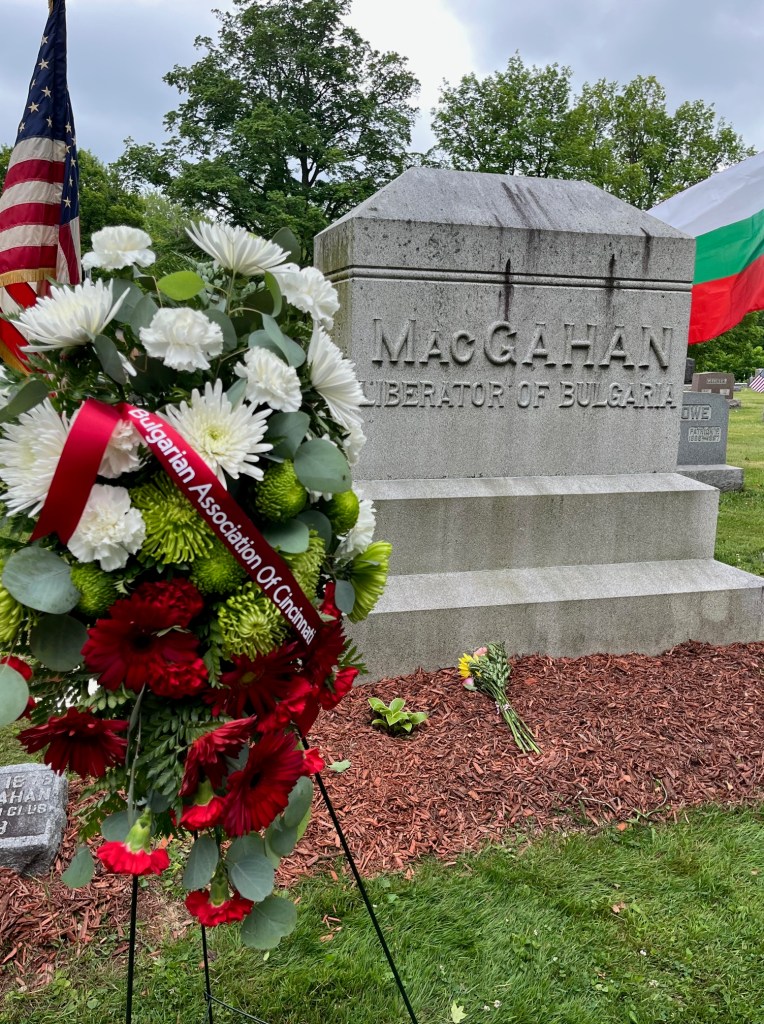
The MacGahan Foundation
In 1978, the 100th anniversary of his death, an organization of Bulgarian-Americans, joined by civic-minded Perry Countians, was formed. Its goal is to keep MacGahan’s memory alive. It sponsors student essay contests and organizes an annual program each June to honor MacGahan. The 2026 gathering will take place Saturday, June 13 starting at MacGahan’s gravesite in the New Lexington Cemetery.
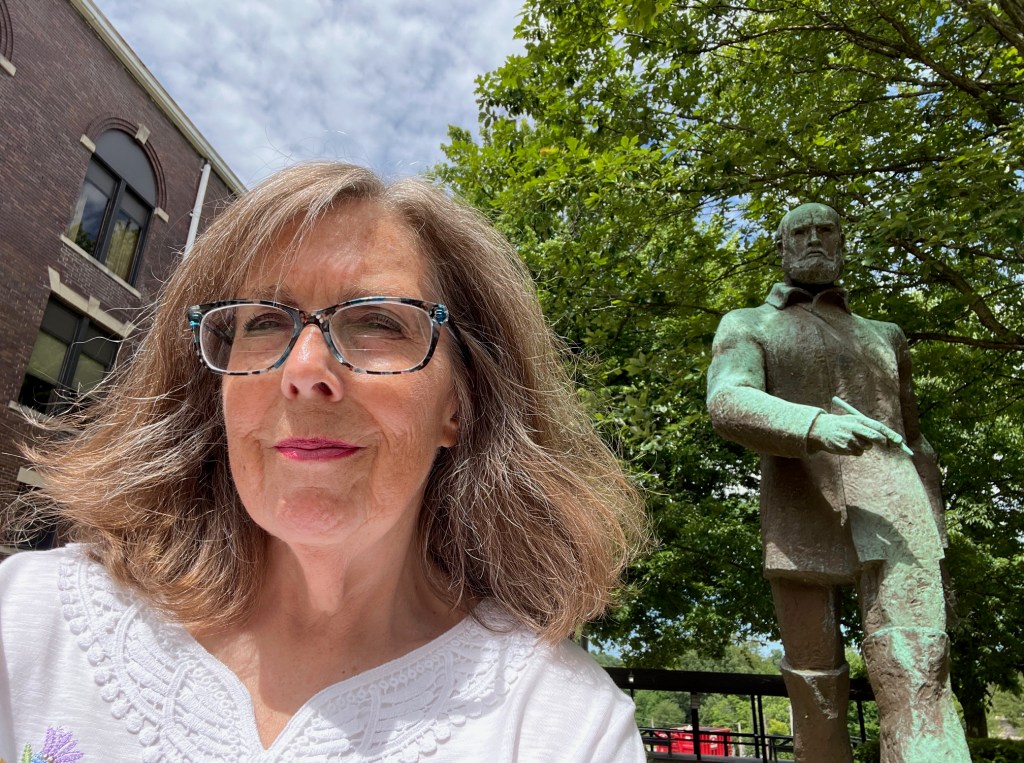
The author of this article is Barbara James, a one-time editor of The Perry County Tribune and one of the founders of the MacGahan Foundation. Now retired, the former journalist is the author of the historical novel titled Ink on Fire: How an Ohio-Born Foreign Correspondent Became Liberator of Bulgaria. It is available in paperback and ebook forms on Amazon.com.
 Found in Ohio