
Dayton, Ohio
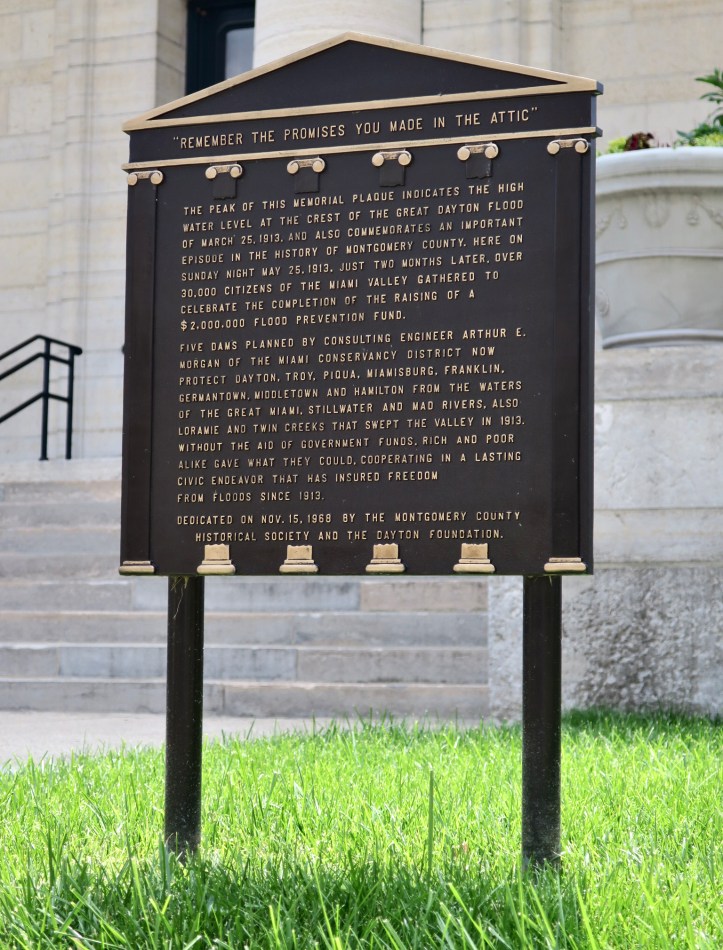
The city of Dayton, Ohio, is located where the Great Miami River and three of its tributaries, Wolf Creek, the Stillwater River, and the Mad River, combine. This was great for those who settled in the area back in the 1800s, as they had plenty of water to run their mills. It wasn’t so wonderful for the residents of the city in 1913, though, as those rivers, combined with a lot of rain and a major broken levee, caused one of the largest natural disasters in the state’s history, where 360 residents died and much of the downtown was under 20 feet of water.
Days of Rain Lead to Flooding
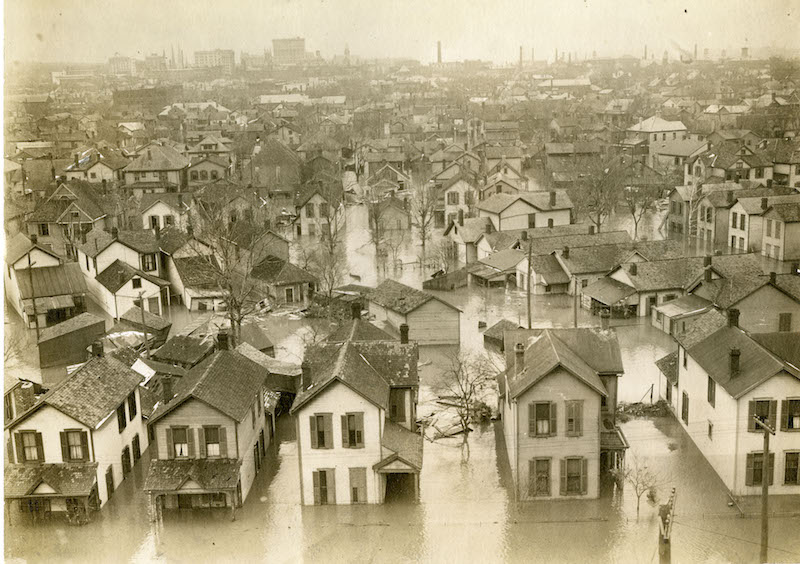
The storm started on Friday, March 21, 1913, and continued for the entire weekend, with heavy rain on and off. By Monday, the 24th, around 11 inches of rain had fallen. The Great Miami River reached its high point of 11.6 feet and started to flood over its banks.
By midnight on March 25th, the main levee, located by Herman Street and designed to protect the city from floodwaters, weakened and broke. By 6am, water poured down the Dayton streets at 25 mph, and additional levees failed, adding to the problem. Finally, during the afternoon of March 26th, water levels stopped rising, but by that point the city was under 20 feet of water.
Add on a gas explosion on the corner of Wilkinsin and 5th Street that takes out a city block and creates additional fires throughout the city thanks to open gas lines, and Dayton had a major disaster on its hands.
Residents scrambled for what they could save and headed to higher ground, like the roofs of the flooded buildings. At the Dayton Public Library, according to Minnie E. Althoff:
“We flew to the shelves, lifting books, supplies and catalogue trays to the top rows wherever there was space, working with all possible speed each at different rooms. Soon I noticed water running along the floor and started for the stairs, when suddenly there was a terrific noise; the east doors and windows were thrown violently open and a great surge of black muddy water rushed in like a tidal wave upon us. I screamed for Miss Walter and Mr. Harvey and made a dash for the stairway. Mr. Harvey was caught in the waves up to his waist, and only with the greatest difficulty succeeded in reaching the first floor. Miss Walter I did not see again … through the hours which followed, I was pursued by the thought that she had perished.”
The Aftermath of the Dayton Flood
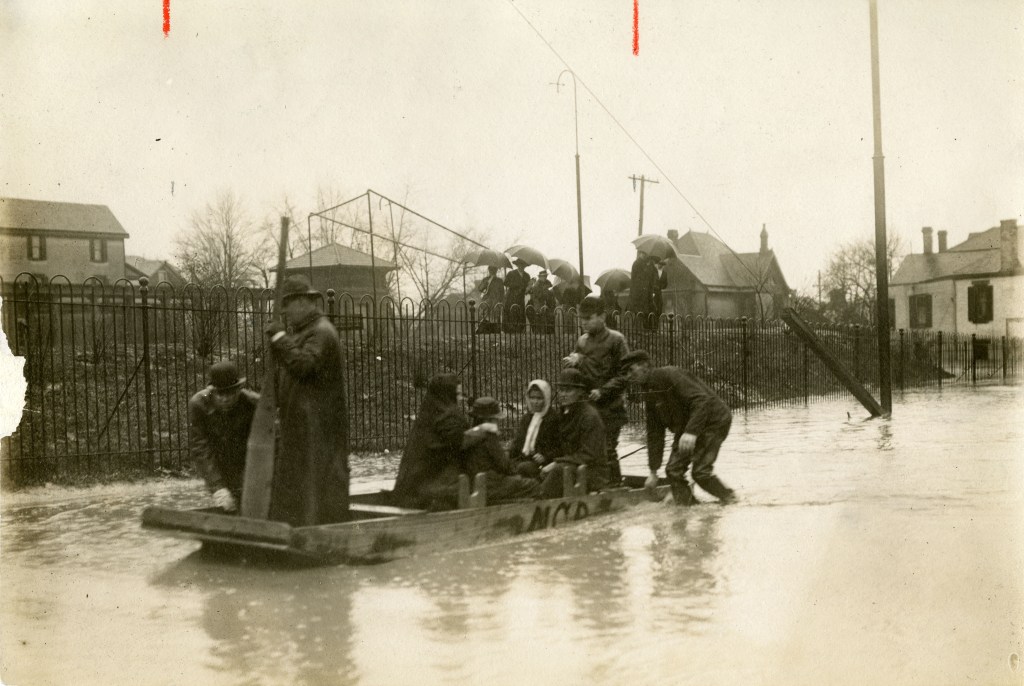
Thankfully, rescue efforts started before the levee broke. Employees of the National Cash Register Company, owned by John H. Patterson, started making flat-bottomed boats. By the time the flood waters crested, they were ready to rescue trapped people.
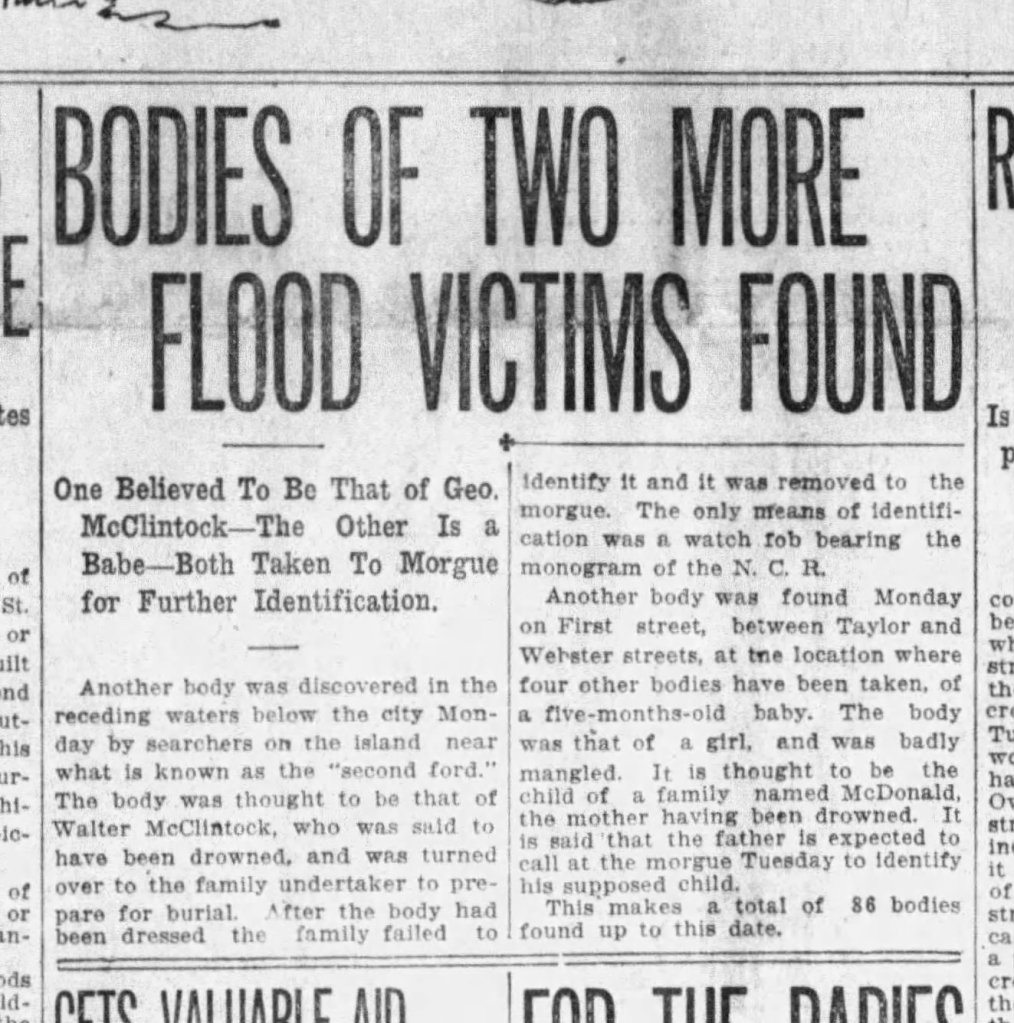
Patterson also allowed people to set up camp on the property, which was above the water line, and permitted the city to use part of his factory as a morgue. At the time, FEMA didn’t exist and there weren’t any controlled relief efforts in place, so people had to figure it out on their own, with a little help from the government.
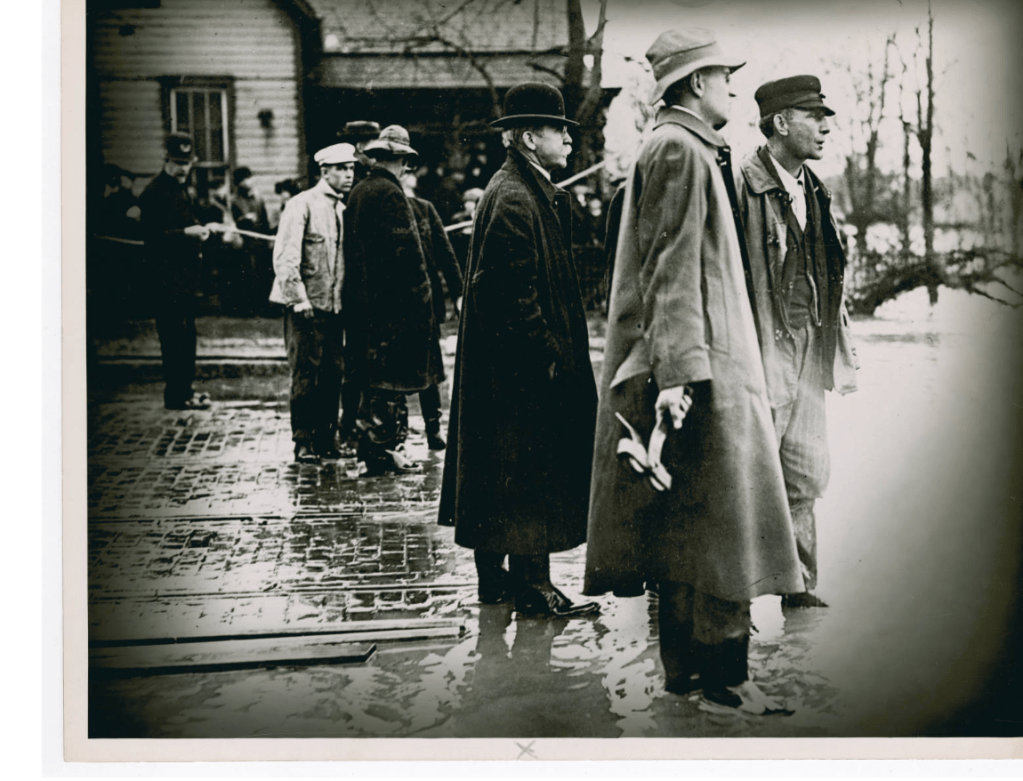
As the flood water began to recede, others set up aid stations that provided food, water, dry clothes, and shelter to those who lost their homes. The mayor called for a ten-day bank holiday, suspending all businesses in the area, and receive help from the National Guard and the Red Cross. The federal government also provided $250,000 (around 8 million in today’s dollars) in funding to help with the clean up efforts.
In all, it took over a year to cleanup the debris and rebuild the flooded parts of Dayton. Over 360 people were killed, 20,000 homes and buildings were destroyed, and there was around $2.3 billion dollars worth of damage. The Dayton Public Library lost 46,000 books, and all of the power lines and distributors downtown were completely destroyed.
One good thing came out of the flood – the creation of the Miami Conservancy District and the larger Vonderheide Act, or the Ohio Conservancy Law. The Ohio government passed the law in order to allow local governments to create conservancy districts in order to create flood control levees dams, and other measures.
In Dayton, hydrological engineer Arthur Morgan designed a water control system and spent five years overseeing its construction. This measure would prevent future floods like this from occurring, protecting current and future residents.
 Found in Ohio