Bedford, Ohio
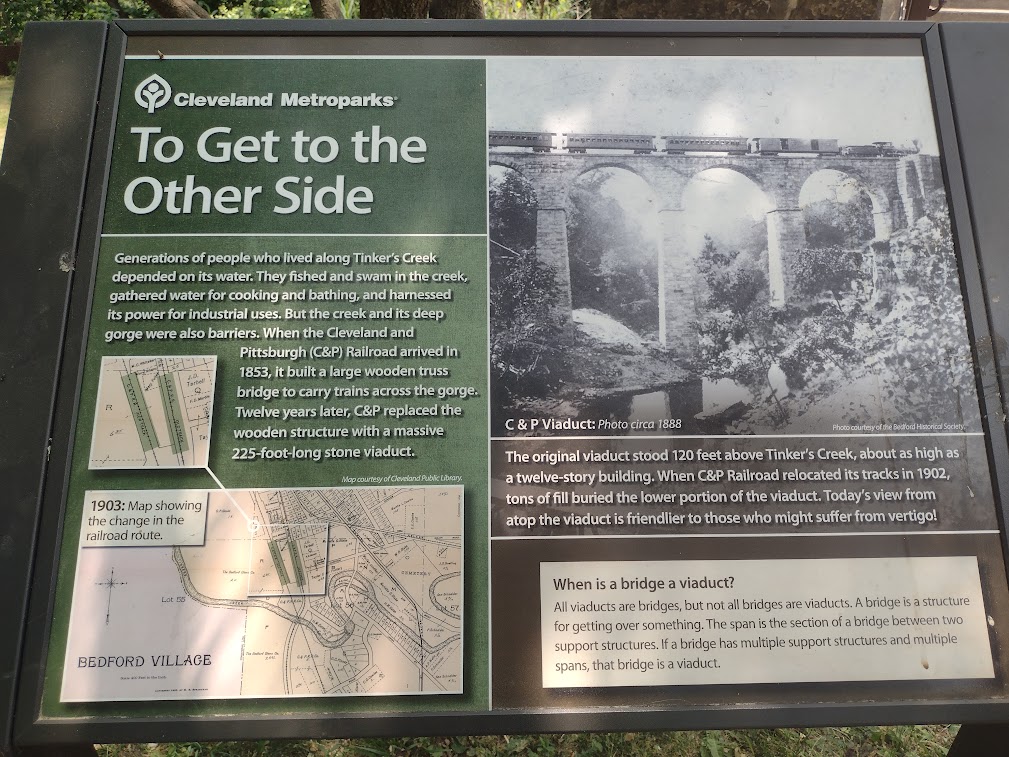
Viaduct Park, located off of Broadway and Union just south of downtown Bedford is home to part of an old railroad bridge that used to cross Tinker’s Creek. Even better, you can walk across the remnants of the 1864 stone bridge, and take in views of the valley below.
Viaduct Park
The park itself is technically part of the Bedford Reservation, although it doesn’t connect to any sections of it via hiking trails. Instead, the park stands on its own, taking up a small corner of Bedford and featuring the old railroad viaduct, as well as the Great Falls of Tinker’s Creek and some remaining bits of the mills and power plant that once harnessed the power of the falls.

Although those sections of the park are extremely interesting, none is more so than the viaduct itself, which is 20 feet wide. There are both steps and a ramp leading up to the top, which extends slightly out over the valley floor. You can also see the new, modern tracks to the west, which replaced the viaduct, making it obsolete.
The Cleveland and Pittsburgh Railroad Bridge

The viaduct, or bridge, if you will, was build by Al Spafford, a contractor for the Cleveland and Pittsburgh Railroad. An earlier version of the bridge, made of wood, stood in the spot for several years before the stone one was completed in 1864. According to sources, Spafford used a 100-foot-tall derrick to put together sections of the bridge and install the keystones on the arches.
Once it was completed, the Cleveland and Pittsburgh Railroad Viaduct was 200 feet long, 100 feet high, and 20 feet wide. There were four arches built into the bridge, each anchored in the creek bed below. It was just enough to provide support for a single line of tracks for the train company.
Fun Fact: On April 27, 1893, the Liberty Bell traveled over the viaduct. It was on its way from Philadelphia to Chicago for the Columbia Exposition.
History of the C & P

The Cleveland and Pittsburgh Railroad was the first to appear in the city, beating a franchise of the Cleveland, Columbus and Cincinnati Railroad by a few months in 1836. Designed to carry iron ore and other freight from one city to another, the C & P as it was nicknamed traveled throughout northeastern Ohio and quickly became the most-traveled railroad line in the country.
Of course, the railroad wasn’t without its issues, required a bailout via public funds in 1847. In order to keep the line moving, the city of Cleveland gave them $200,000 (over $7 million in today’s funds) in city money in exchange for stock in the C & P. It was enough to keep the railroad going, which eventually led to the creation of the viaduct over Tinker’s Creek that exists today.
Viaduct Park
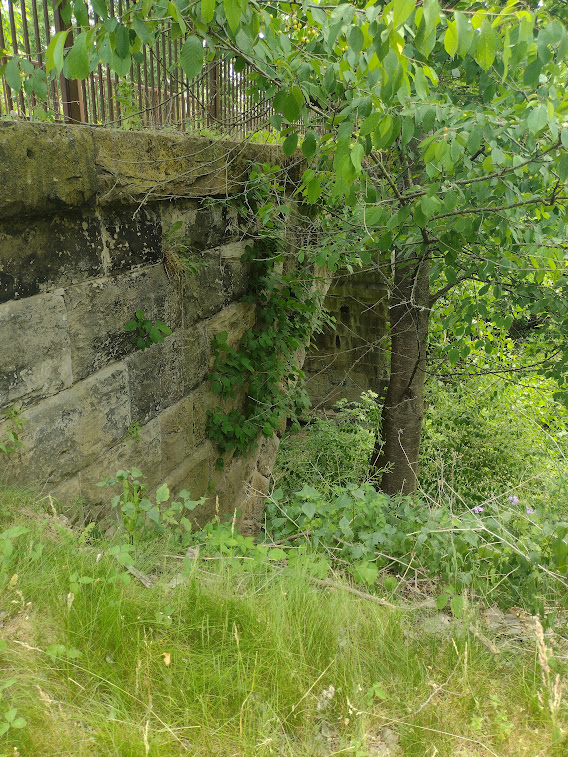
Viaduct Park opened in 2002. Prior to that, the Cleveland Metroparks worked to revitalize the area, create the walkway on top of the viaduct, and put in a walking path to the falls. They left many of the grist and saw mill remnants intact so that you can see them as you’re looking at the falls. It’s an interesting piece of Cleveland (and Bedford’s) industrial history.
Sources:
- https://s3.amazonaws.com/NARAprodstorage/lz/electronic-records/rg-079/NPS_OH/75001351.pdf
- https://pressbooks.ulib.csuohio.edu/bridges-of-metropolitan-cleveland/chapter/the-railroad-era-in-cleveland-bridge-history/
- https://www.clevelandmetroparks.com/parks/visit/parks/bedford-reservation/viaduct-park
 Found in Ohio