
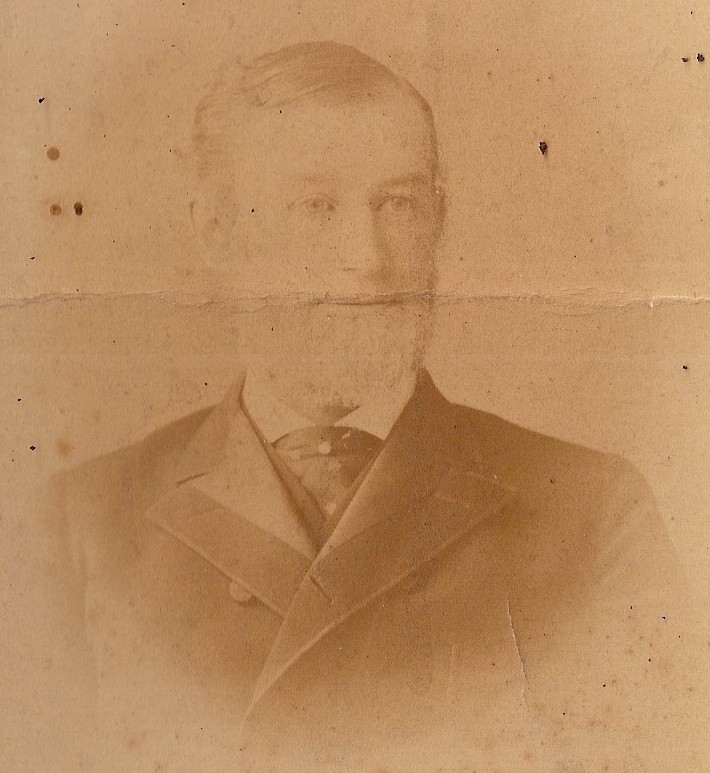
Pull up a list of historic Cleveland housing and building developers, and you’ll see the greats. The Van Sweringen Brothers, who developed the Terminal Tower complex, and Jonathan Goldsmith, who designed some of the homes on upscale Euclid Avenue, top the list, not those who built the simple houses that everyday people lived in. Today, we’re going to pull back that proverbial curtain and discuss one of those “little guys”: LM Southern.
Lemuel Marvin Southern

LM Southern, born Lemuel Marvin Southern in Ithaca, New York in 1831, moved to the Rockport (now Cleveland) area when he was young. He married Elizabeth Gale in 1858. They settled on the east side, on Lamont Street, and raised two kids, Kittie and William (a third, Lemuel Marvin, Jr. died in infancy.)
Rather than work a standard job at the time, like selling goods in a store or working in manufacturing, LM Southern took advantage of the fact that people were moving to Cleveland in droves in order to work at the factories, and that these people wouldn’t have the cash on hand to buy a plot of land and build a house outright. He solved that problem by selling land and houses to interested buyers on a payment plan, to the point of even paying the property tax on the parcels himself until the buyers had paid for everything in full.

Buying and Selling Thousands of Properties

He seemed like just one of around a dozen people doing the same thing: turning former farms near the city into standard housing developments. The maps at the time show just how much land he eventually owned, and a glance through the old property records comes up with over 1,500 plots of land that he bought and sold.
However, he did more than that. Records show that he fought legal battles to have the properties subdivided, as residents at the time preferred the rural look of nearby farmland. He won, and those restrictions were lifted, while at the same time, he implored the fledgling city of Cleveland to extend the streetcar lines to St. Clair Avenue, home of his Victoria Park development. Street lamps soon followed, turning the area into one more desirable for middle-class residents.
As the “dean” of real estate agents and developers at the time, according to his obituary, Southern got to know and work with some of the city leaders. One newspaper ad announces the incorporation of a new business, Victoria Park, Co. It started with $50,000 in capital and included a number of partners, including LM Southern, AC Klumph (Arch C Klumph) who started the modern Rotary movement, and Louis H. Winch, a well-known judge.
The LM Southern Realty Company

Despite incorporating the Victoria Park Co., LM Southern also ran his own business, the LM Southern Real Estate and Improvement Company, which ran out of what was then called the New England Building (now the Guardian Bank Building, located at 617-637 Euclid Avenue.
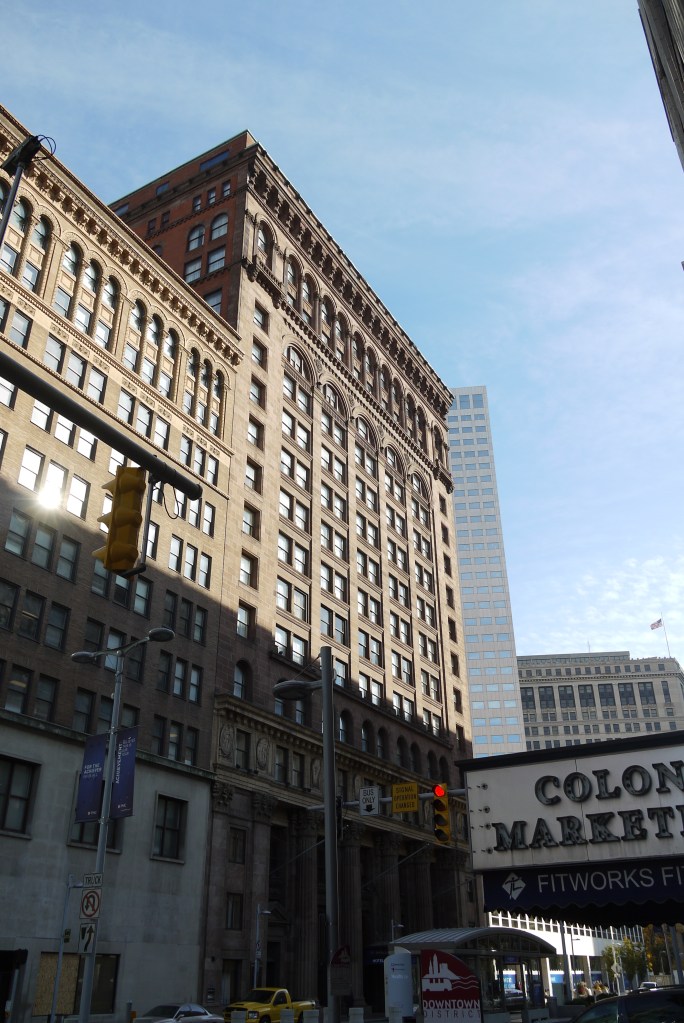
From his office there, he kept track of real estate transactions, placed hundreds (if not thousands) of ads in the newspapers to sell his allotments, and ensured that buyers paid their installments on time. At a few points, things fell through the cracks, and notices popped up in the Cleveland Plain Dealer informing the world that he and his company owed back taxes on some of their properties.
The “Spite Fence”
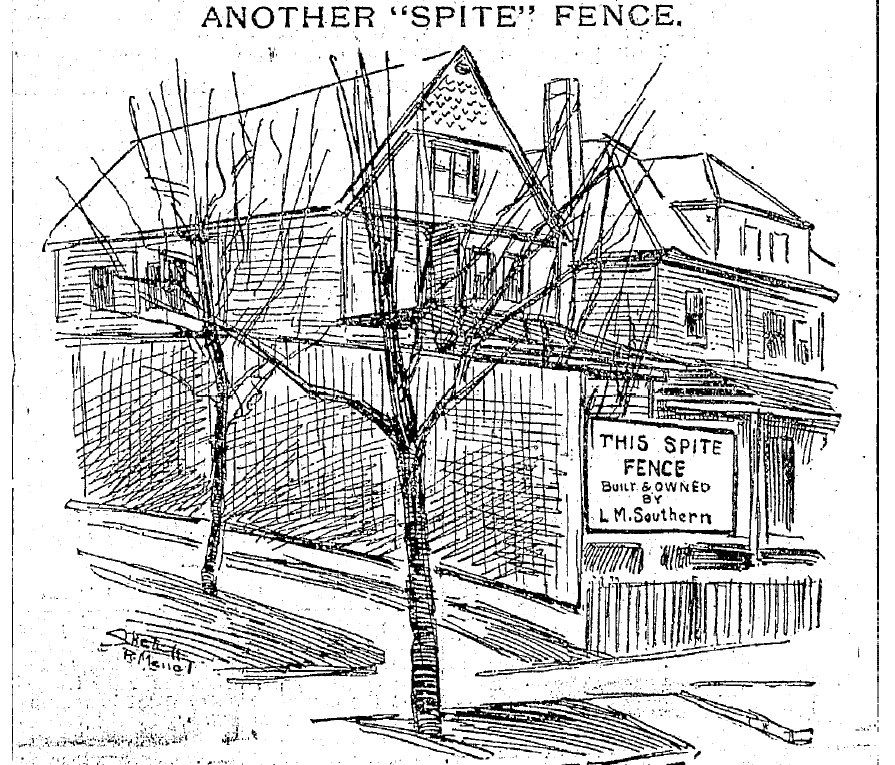
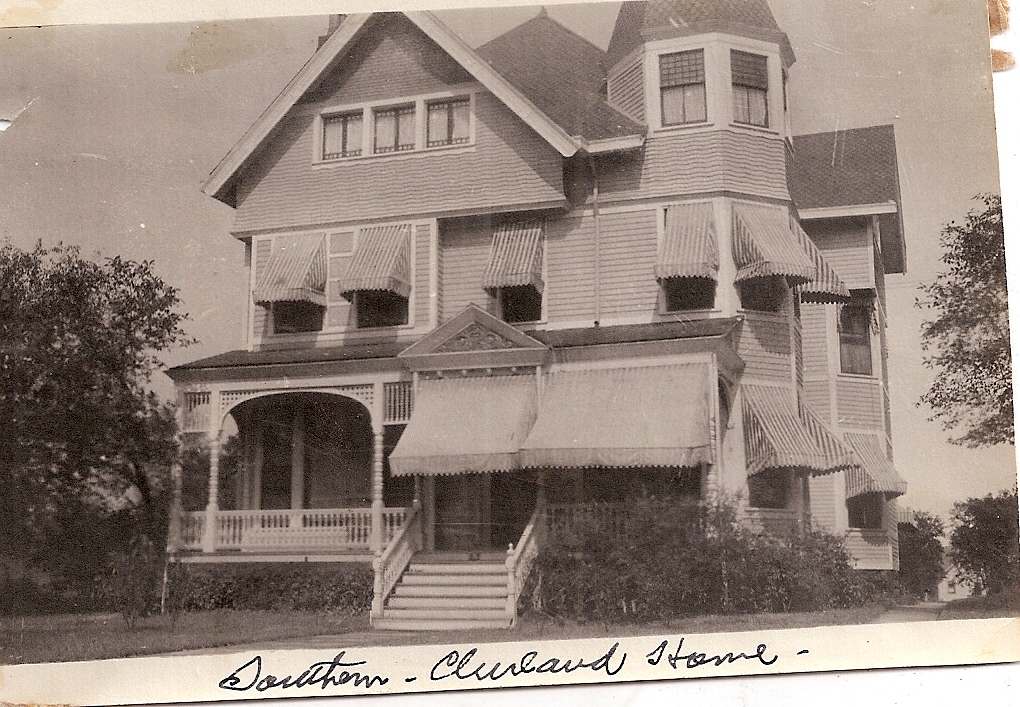
Even though LM Southern built houses on small lots for everyday people, he didn’t want them encroaching on his own property. He owned two acres of land on Lamont Street, near the corner of Republic Street. The large house that he and his family occupied was set back 125 feet from the road and stood out in the neighborhood due to its many gables and large front porch. Adding to that was the long, winding driveway that led to the back of the property where the family’s personal stables were located. It was a home befitting a real estate man.
The problem occurred when his neighbor, Samuel N. Pentecost, a well-known florist, built three smaller homes on his property, all of which were closer to the street. LM Southern, feeling as though his privacy was being invaded as those houses were right next to his front yard, built a giant, bright red fence separating his property from the others. Pentecost fired right back, placing a sign on the fence that read “This Spite Fence Erected and Owned by LM Southern.” There’s no word on whether the shenanigans ended there or continued on in court.
LM Southern’s Legacy

LM Southern finally retired from the real estate business in 1910, at the age of 78. He lost his wife 8 years earlier, and it was time to close up shop. Two years later, he died at home of rheumatism and other ailments that befall someone who’s 80 years old.
He was instrumental in developing much of the northeastern side of the city, including properties in Glenville, like Victoria Park and part of Forest Park, as well as the Wade Park Ave. and Genesee allotments, and properties in East 55th, White Ave., and Dorchester Ave., Glen Park Place, and more. Although his family home no longer stands on Lamont Street, and some homes in his former developments have been torn down, others still exist, part of his desire to make this part of Cleveland comfortable and within reach of those who worked hard for a living.

Why isn’t LM Southern better known in Cleveland history? Sometimes people slip through the cracks of time, even if they’re described as “one of the oldest and best known real estate agents in the city.” He was also broke when he died, owning only a few shares of stock in his own company, plus a bit of equity in his home on Lamont Street.
LM Southern is buried in Lake View Cemetery alongside his wife, infant son, and several other members of his family. And now he’s a little better known than he was before.
Sources
- Find a Grave – Lemuel Marvin Southern
- Encyclopedia of Cleveland History – Glenville
- Newspapers.com – The Cleveland Leader and Cleveland Plain Dealer
- The Cleveland Public Library Center for Local & Global History
- Cleveland City Council Archives
 Found in Ohio