Pleasant Township, Ohio

The tiny hamlet of Georgesville sits inside of Pleasant Township in Franklin County, Ohio. Despite its small size, this unincorporated community holds some interesting history.
The Founding of Georgesville
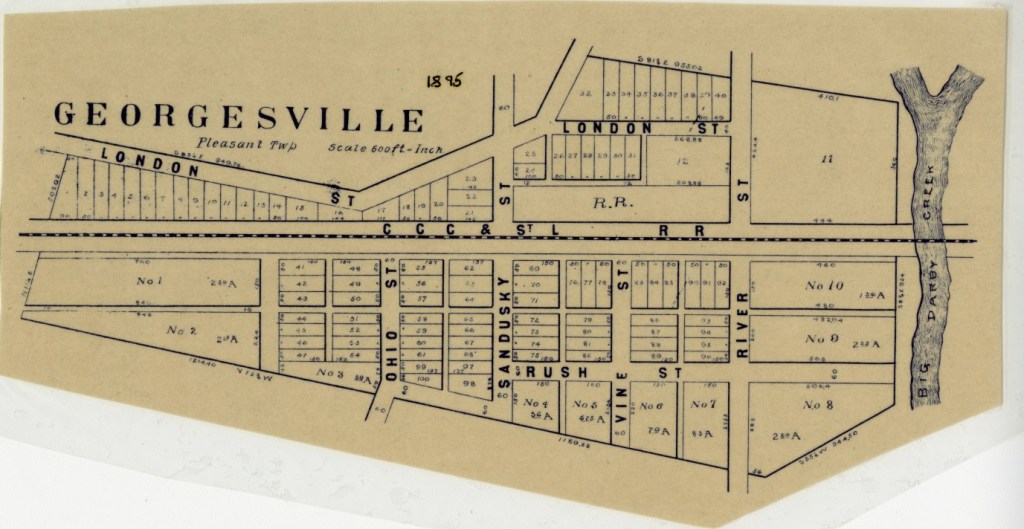
Although nearby Franklinton gets the credit for being the first white (read: non-Native American) settlement in the county, it was actually founded slightly after Georgesville in 1797. The village received its name in one of two different ways:
- The first settlers in Georgesville were George Spencer and his son-in-law, also named George. Only in this case, his last name was Osborne. Two men named George in the same village… might as well name it after them.
- The man who laid out the plat for the town, Thomas Roberts, named it Georgesville because there were four men with the name of George living within it. They included the aforementioned Georges, as well as George Lambert and George Sullivant.
No matter where the name came from, Georgesville was supposedly, as they phrased it back in the day, “a tough town.”
Gristmills and Homes
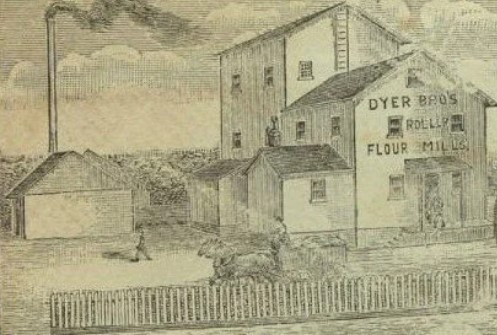
Georgesville is located on the banks of both the Big Darby and Little Darby Creeks. While it’s surrounded by parks these days, back in the early 1800s, it was the home of a gristmill, a church, and several streets of homes.
The gristmill is noteworthy because it was the first one in this part of Ohio, north of Chillicothe. It started off as Dyer’s Mill (owned by Samuel Dyer), before changing names and owners several times, only to end up back as Dyer’s Mill under William Dyer. The village also featured a pub or tavern, a stagecoach stop, and a post office. A school opened in 1811 to serve the settlers’ children, and by 1876, Georgesville had two churches: Mount Zion United Brethren Church and Georgesville Methodist Church.
The area thrived for several decades, thanks to the nearby creeks. However, in 1869, when the railroad came through, most people moved slightly north to New Georgesville in order to be closer to the station.
As a result, Georgesville never grew in size, and the land around it was turned into parkland, leaving the residents to go to nearby towns to shop and work. By the early 1900s, Georgesville lost its post office, and in 1913, its covered bridges washed away in a flood.

Current-Day Georgesville
These days, there aren’t many businesses in Georgesville, so if you want to visit, stop at the Battelle Darby Creek Park. The town is also where the Big Darby and Little Darby Creeks meet. Both of them are considered National Scenic Rivers.
And of course, there are two cemeteries within village limits. One is the Gardner Cemetery, which consists of several graves within Battelle Darby Creek Park, and Oak Grove Cemetery, equally old, but larger and better cared for.
 Found in Ohio